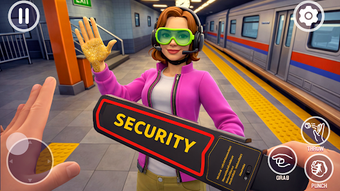
Station-side security sim for short, decision-driven mobile sessions
Subway Security Guard, developed by Game Reaper Studios, places the player in charge of safety at a busy railway station. The app tasks players with screening passengers, using metal detectors and X-ray scanners, and managing crowd flow during timed rush hours to spot threats. Key elements include level-based missions, time-based decision mechanics, realistic station visuals and offline play. It targets fans of security simulators and casual role-playing who prefer decision-focused mobile gameplay.
What kind of game is Subway Security Guard?
In this game, you operate as a station security officer in a role-playing simulation that emphasizes task-driven shifts. The core loop asks you to inspect passengers and make entry decisions under time pressure. The title exposes players to a realistic railway environment and a passenger scanning system; tools listed in the description include metal detectors, X-ray scanners, and manual inspections for threat identification.
Does it support multiplayer or shared sessions?
Inside the simulation, the design favors a solo, offline experience rather than cooperative play. The material specifies the game is playable offline and frames progress through level-based missions with escalating passenger volume and threat complexity. That structure shapes play as individual shift management instead of team coordination, which fits players who prefer single-player challenge on mobile devices.
What does the game look and sound like?
On the mobile screen, visuals and audio aim for realism tailored to a transit hub. The description highlights realistic station visuals and sound effects and notes smooth animations and simple touch controls optimized for Android. The interface focuses on quick inspections and clear feedback so players can react during rush hours; menus and controls emphasize short interaction loops for casual sessions.
Is it hard to get started and how does difficulty evolve?
During early shifts, entry is accessible because controls are touch-based and gameplay is presented as short missions. Difficulty escalates through higher passenger volumes, rush-hour pressure, and the addition of VIP or suspicious characters. That progression creates a steeper challenge over time, rewarding quicker decisions while raising the stakes for players who enjoy timed, performance-oriented tasks.
Who should play it and when it fits best
Subway is a practical choice for fans of security simulators and casual role-playing who enjoy compact, decision-led sessions on mobile. One consideration: the single-player, mission-driven scope narrows the experience, so players seeking open-ended exploration or cooperative multiplayer may find it limiting. For goal-oriented players who like quick, pressure-filled shifts, the app is worth trying on Android devices.